Key takeaways
- Find the source before choosing a fix.
- Roof water is a common cause, and often the simplest to correct.
- Surface water needs grading and swales, subsurface water needs drains.
- Water needs a safe place to go.
Find the source
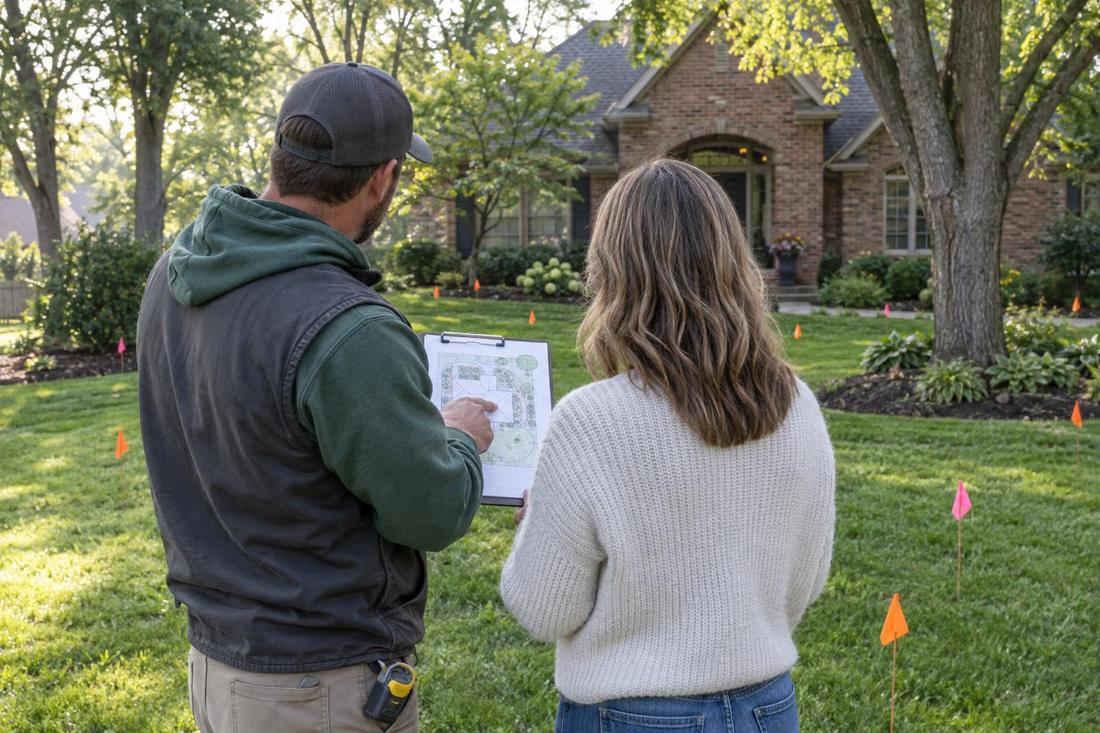
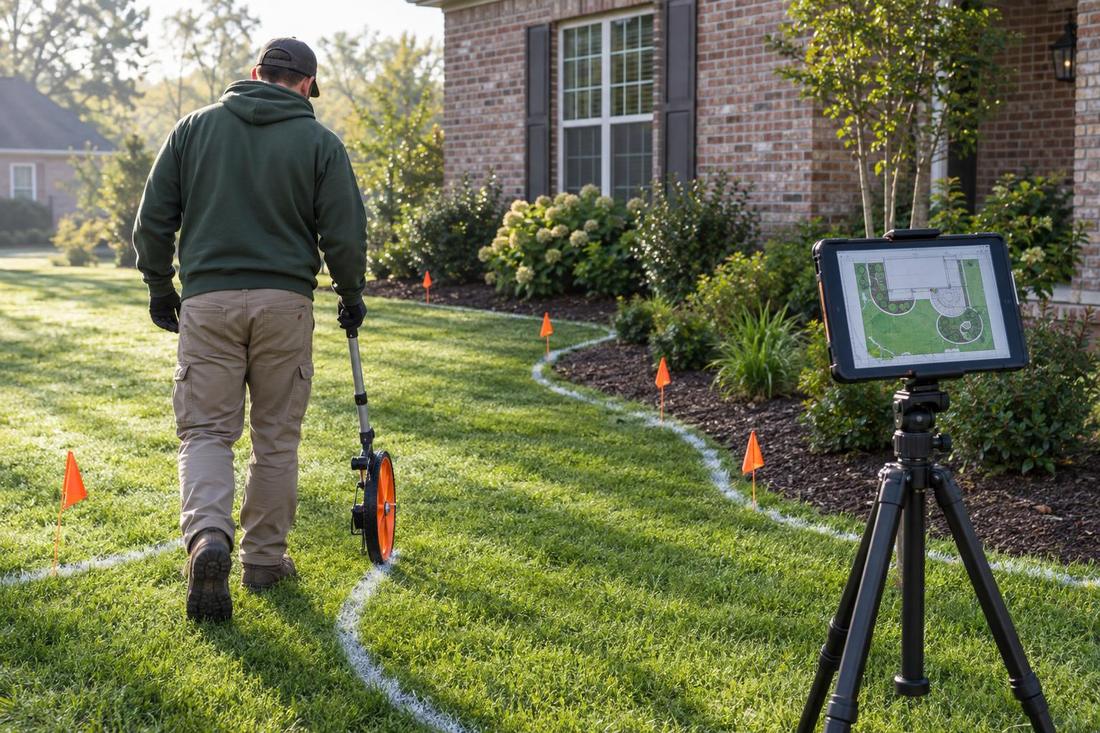
Walk the yard during or right after a heavy rain. Note where roof water lands, where it flows across the surface, where it collects and where the soil stays soggy. Photos and a few stakes help.
Check for neighbors' runoff, clogged gutters and downspouts that discharge too close to the house.
Start with the roof
Downspouts that drop at the foundation load the soil with water. Extending them or tying them into a buried line sends water away. This often improves wet spots quickly.
Make sure gutters are clean and sized for the roof.
Surface and subsurface fixes
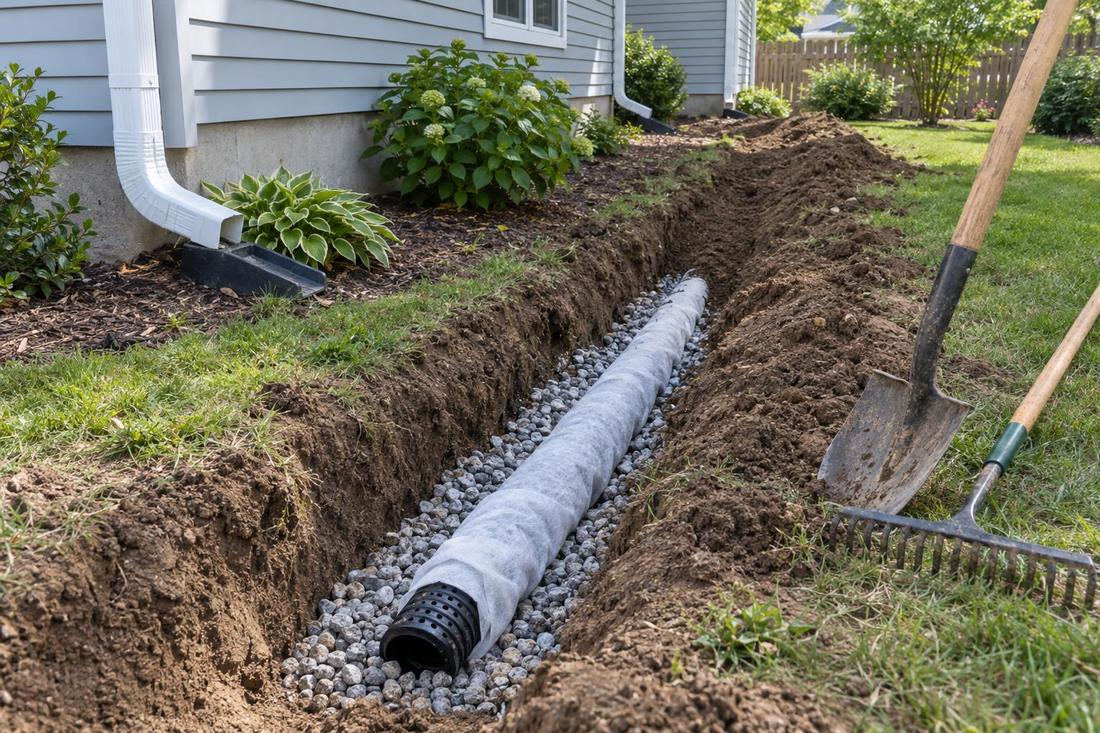
Regrading directs surface water away from the house. Swales are shallow, planted channels that carry water. French drains collect water below the surface and move it through pipe. Catch basins gather water from low spots.
Many yards need a combination of these.
Outlets and rules
Every fix needs somewhere for the water to go: the street, a swale or a dry well. Do not push water onto neighbors, which can create legal problems. Some work may need permits or approval.
We plan drainage for homes across Nashville and Middle Tennessee with the outlet decided first.
Quick answers
Will a French drain solve my wet yard?
It helps with subsurface water. Surface flow needs grading and swales too.
Can plants help?
Yes. Rain gardens and water-loving plants help soak up runoff, but they do not replace drainage.