Key takeaways
- Water pressure is the main enemy of retaining walls.
- A buried base, drainage rock and pipe are essential.
- Taller walls need reinforcement and often engineering.
- Choose materials by look, height and budget of upkeep.
Why walls fail
Soil held back by a wall becomes heavy when it is wet. Without drainage, water pressure builds behind the wall and pushes it out. Poor base preparation and no reinforcement add to the problem.
Most failures come from skipped details you cannot see once the wall is finished.
Materials
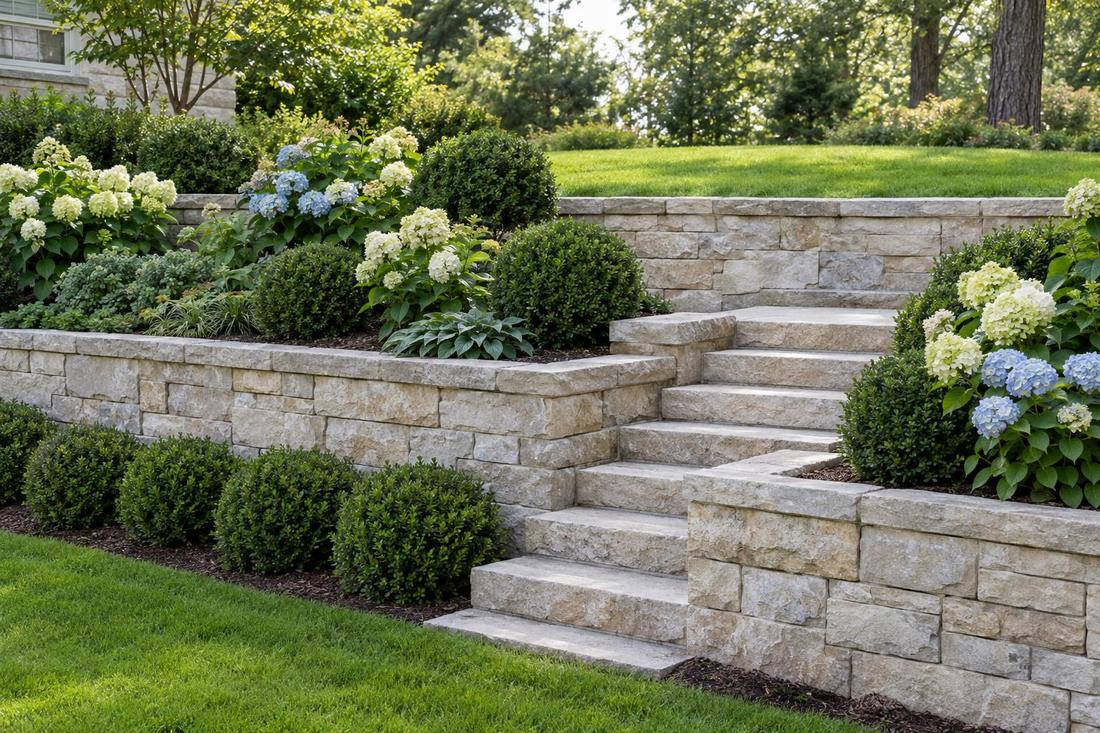
Segmental concrete block is common and engineered for walls. Natural stone gives a handmade look. Boulders suit informal settings. Timber works for low walls but rots over time.
Each has strengths in look, lifespan and how they are installed.
Base, drainage and reinforcement
A buried base of compacted aggregate supports the wall. Clean gravel behind the wall and a perforated pipe carry water away. Geogrid layers tie taller walls into the soil behind.
Setting the first course carefully makes the rest straight.
Height and permits
Walls over about four feet often need engineering and may need permits, and tiered walls can count as one tall wall. Rules vary, so ask your city or county.
We explain limits and options for retaining walls across Nashville and Middle Tennessee before we build.
Quick answers
Can I plant on top of a wall?
Yes, but plan roots, water and edge details so the wall is not stressed.
Can two short walls replace one tall one?
Often yes. Tiers need space between them and may still count together for rules.