Key takeaways
- Layer light: path, accent and wash, not one bright source.
- Warm white looks the most natural outdoors.
- Low-voltage LED systems are efficient and safe.
- Aim and shield fixtures to avoid glare.
Layers of light
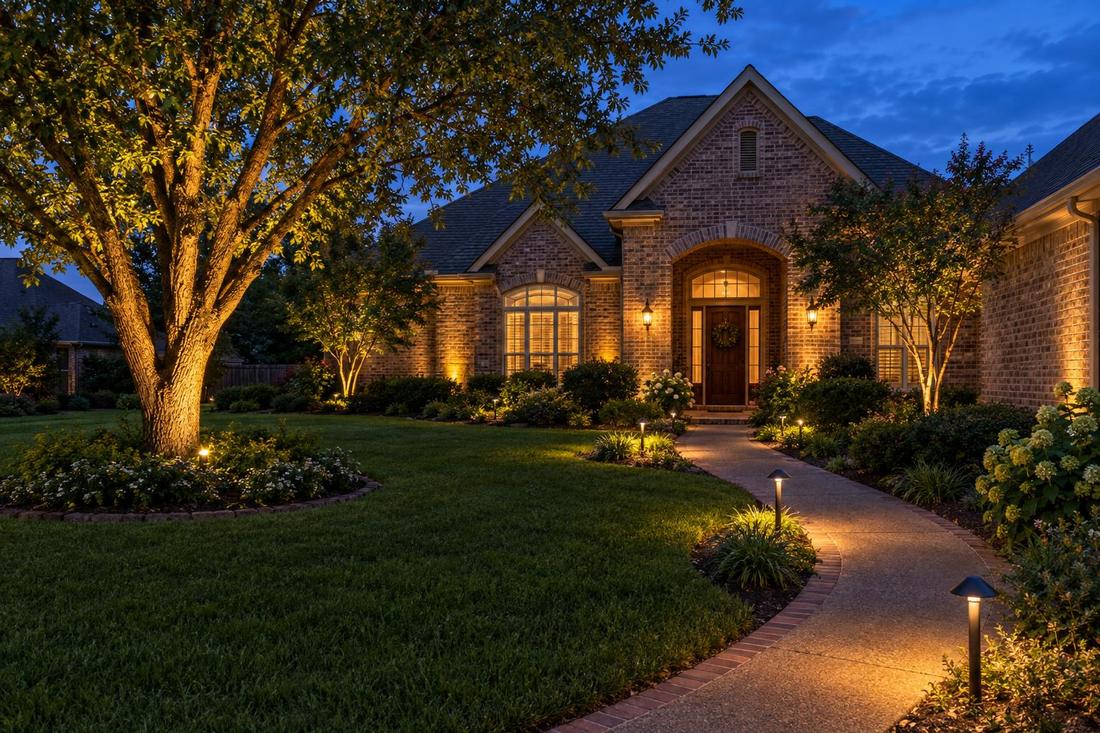
Path lights mark walkways and steps. Uplights highlight trees and walls. Downlights, mounted high in trees or on eaves, create soft moonlight. Together they give depth.
Subtle lighting reads better than lots of bright fixtures.
Color and brightness
Warm white light, around 2700 to 3000 Kelvin, flatters foliage and brick. Cooler light can look harsh. Choose lumens modestly and aim for pools of light rather than floodlights.
Dimmers and timers help tune the effect.
Low-voltage systems
A transformer reduces power to a safe level for outdoor fixtures, which are wired with buried cable. LED fixtures use little power and last a long time. Quality fixtures resist corrosion and moisture.
Plan transformer capacity for future additions.
Placement tips
Shield fixtures from view, point uplights from the side, keep path lights spaced for even coverage and light steps clearly for safety. View the result after dark and adjust.
We design lighting for homes across Middle Tennessee, including Nashville, with a dusk walk-through to fine-tune the layout.
Quick answers
Is solar lighting good enough?
Solar fixtures are simple, but brightness and reliability vary. Wired systems are steadier.
Will lights attract bugs?
Warm-colored LED light attracts fewer insects than cool white.