Key takeaways
- Clay holds nutrients but drains slowly and compacts easily.
- Add compost and organic matter, not sand.
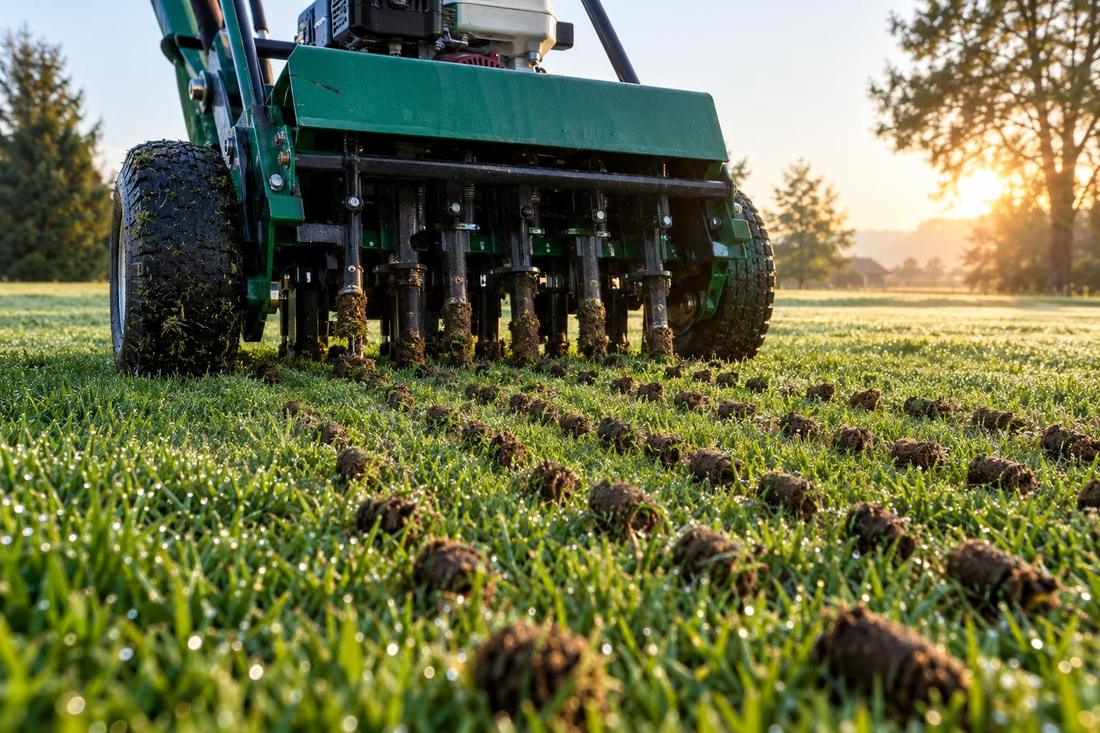
- Aerate lawns to open compacted soil.
- Plant high and mulch rather than burying roots in a clay bowl.
What clay does
Clay particles are tiny and pack tightly, so water moves slowly and air is limited. In wet weather it stays soggy, in dry weather it bakes hard and cracks. Roots struggle in either state.
The good news is that clay holds nutrients well and can be improved over time.
Improve it with organic matter
Compost, leaf mold and aged bark mixed into the top several inches of soil improve structure and drainage. Mixing in sand alone can create something like concrete, so avoid it.
In new beds, till or loosen a wide area, not only the planting hole.
Lawns on clay
Core aeration reduces compaction and helps water and roots go deeper. Overseeding after aeration thickens turf. Top-dressing with compost over time improves the soil without digging.
Avoid driving or parking on wet lawns, which compresses the soil further.
Planting in clay
Dig wide, shallow holes rather than deep ones, set the root flare slightly above the surrounding soil and mulch. Raised beds or mounded beds help plants that dislike wet feet.
We prepare beds for homeowners across Nashville and Middle Tennessee with this in mind.
Quick answers
Should I add sand to clay?
No. Organic matter such as compost is the better choice.
How long does it take to improve clay?
Beds improve right away with prep. Lawns improve gradually over seasons of aeration and top-dressing.