Key takeaways
- Choose plants rated for our climate zone and our clay.
- Match each plant to sun or shade before you fall for the flower.
- Mix evergreens, deciduous shrubs, perennials and grasses for year-round interest.
- Natives support birds, bees and butterflies and often need less care.
Trees and big shrubs
Oaks, red maple, redbud, dogwood, crape myrtle and southern magnolia suit many yards. Smaller flowering trees give spring color without the size of a shade tree. Choose the tree for its mature size, not its size in the pot.
Evergreen shrubs such as holly, boxwood and viburnum give structure through winter.
Perennials and grasses for sun
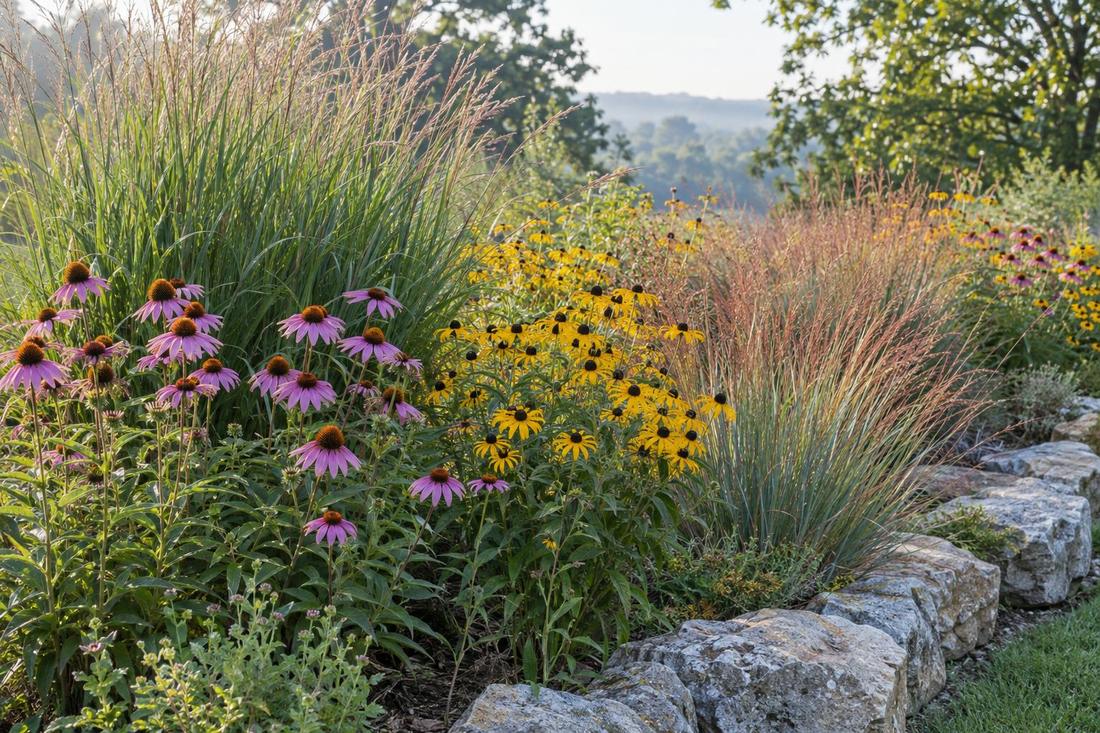
Coneflower, black-eyed Susan, salvia, daylily, sedum and bee balm do well in full sun. Ornamental grasses such as switchgrass, little bluestem and maiden grass add movement and winter texture.
Plant in groups of three or five for a natural look.
Plants for shade
Hosta, fern, heuchera, hellebore, brunnera and native woodland plants thrive under trees. Oakleaf hydrangea and aucuba give shrub structure in shade.
Under large trees, add soil gently so roots are not buried deeply.
Dealing with deer and clay
Some plants are less attractive to deer, such as boxwood, ferns and many herbs. Clay soil holds water and nutrients, so improve it with compost and avoid plants that need sharp drainage unless you build raised beds.
We select plants for homes across Nashville and Middle Tennessee based on light, soil and your upkeep preferences.
Quick answers
What zone is Middle Tennessee?
Most of the region falls in USDA zone 7, with some variation. We choose plants rated for it.
Do native plants really need less care?
Once established, many do, especially for watering and feeding.