Key takeaways
- Pavers are flexible, repairable and available in many styles.
- Poured concrete is simple but can crack and is hard to repair invisibly.
- Natural stone is beautiful and varies by type and thickness.
- The base under any patio matters as much as the surface.
Pavers
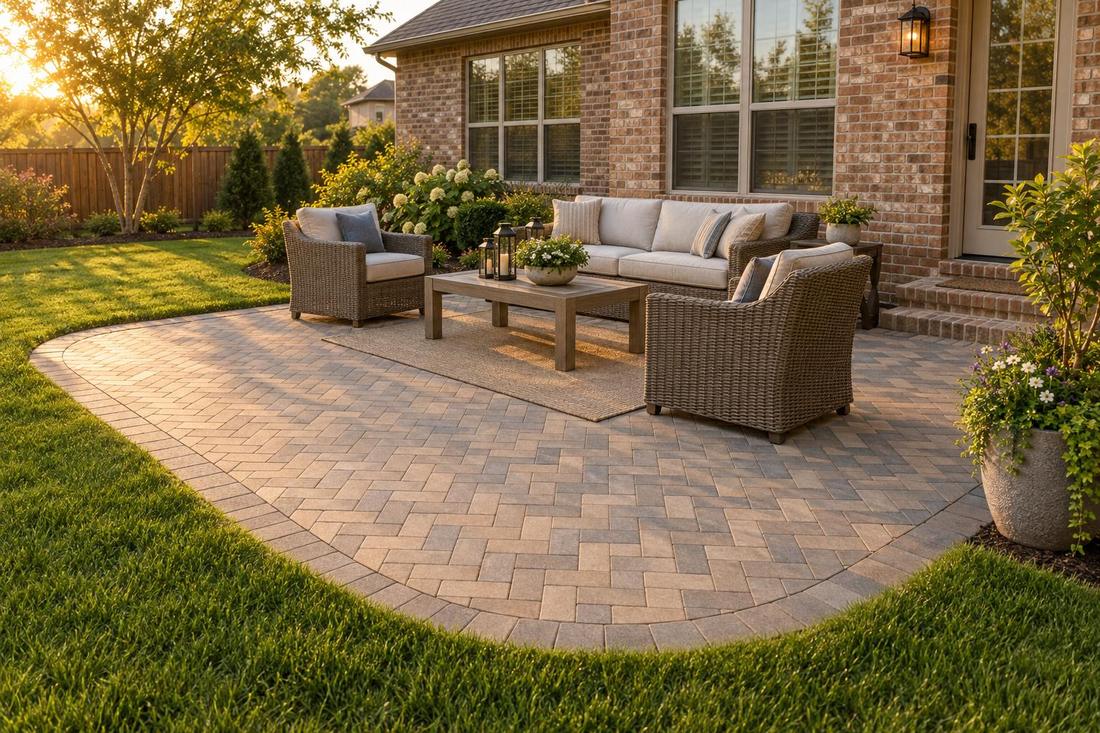
Concrete or clay pavers are laid on a compacted base with sand and polymeric joints. They shift a little rather than cracking, and individual pavers can be lifted and reset. Patterns and colors are almost endless.
Weeds and ant activity in joints need occasional attention.
Poured concrete
A concrete slab is quick and economical, and can be stamped or stained. But concrete is rigid and can crack with soil movement. Repairs show, and replacement means breaking it out.
Good base, control joints and sealing help it last.
Natural stone
Flagstone, bluestone, limestone and similar stones give a natural look. Some are set in sand or stone dust, others on concrete. Thickness and type affect durability and slip resistance.
Stone varies from piece to piece, which is part of its charm.
The base matters most
Whatever the surface, a patio needs a deep, compacted aggregate base, a gentle slope for drainage and firm edges. Skipped base work leads to sinking, pooling and gaps.
We build patios for homeowners across Middle Tennessee, including Nashville, with this base-first approach.
Quick answers
Which patio material lasts longest?
All can last decades when built on a proper base. Pavers are easiest to repair.
Can I put a fire pit on pavers?
Yes, with the right heat-safe base and clearances. We plan it with the patio.