Key takeaways
- Tall fescue is seeded, aerated and fed mainly in fall.
- Bermuda and Zoysia are planted and fed in late spring and summer.
- Pre-emergent weed control goes down before crabgrass germinates.
- Water new seed and sod consistently until established.
Cool-season lawns: fescue
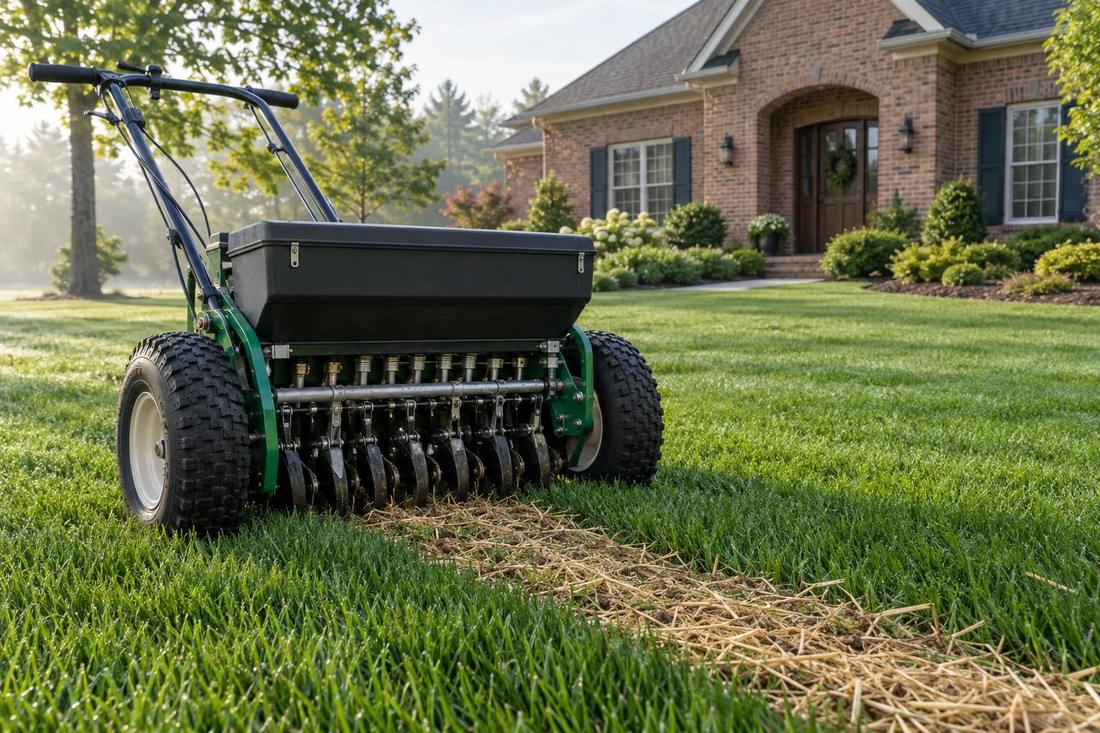
The best time to seed or overseed tall fescue is early fall, when soil is warm and nights are cool. Aerate first, then seed. A second light feeding in late fall helps roots.
Spring seeding is possible but young grass faces summer heat, so fall is the better choice.
Warm-season lawns: Bermuda and Zoysia
Plant Bermuda and Zoysia in late spring through early summer, when soil is warm. Feed in late spring and summer, and stop feeding as growth slows in fall.
Aeration is best done in late spring or early summer for these grasses.
Weed control timing
Apply a pre-emergent in late winter to early spring, before soil warms enough for crabgrass seeds to sprout. Treat broadleaf weeds when they are actively growing.
Do not use pre-emergent where you plan to seed, since it blocks grass seed as well.
Watering new work
New seed needs light, frequent watering to stay moist until it germinates. New sod needs generous water so roots knit into the soil, then less often. A schedule from an installer is worth following.
We explain the calendar to homeowners across Middle Tennessee, including Nashville, whenever we seed or sod.
Quick answers
When should I aerate?
Fall for fescue, late spring or early summer for Bermuda and Zoysia.
Can I fertilize in summer?
Warm-season grasses can be fed. Fescue should be left alone in summer heat.